What Every Utah Homeowner Should Know Before Replacing a Roof
Honest answers about cost, timing, materials, and warranties from a company that has installed over 5,000 roofs in 23 years. No sales pitch. Just the information you need to make a confident decision.
Table of Contents
1. How Often Should a Roof Be Replaced?
If your roof was installed right with quality materials, it should protect your home for decades. Over the past 23 years and 5,000+ roofs installed, one of the most common questions we hear is "How do I know when I should bite the bullet and get a new roof? Or would a repair buy me more time?"
That is exactly what this guide will help you figure out. No roof lasts forever. Here in Northern Utah, our roofs take a beating. Hot summers. Freezing winters. Heavy snow loads. Wind that comes off the mountains and does not quit. All of that shortens a roof's life compared to milder climates.
The biggest factor is what is on your roof right now.
How Long Different Roofing Materials Last in Utah
Asphalt Shingles
20 to 30 Years
The most common roof in Utah. Three-tab shingles last 15 to 20 years. Architectural shingles like GAF Timberline HDZ last 25 to 30 years with proper installation. Most of the roofs we replace are 3-tab shingles that have hit the end of their life.
Metal Roofing
40 to 70 Years
Standing seam and exposed fastener metal roofs handle Utah snow well and last two to three times longer than shingles. Higher upfront cost but you may never replace it again.
Synthetic and Cedar Shake
30 to 50 Years
Cedar shake gives your home a classic mountain look but needs regular maintenance and fire treatment. Synthetic shake options like DaVinci deliver the same curb appeal with less upkeep and better fire resistance. We install both and help you pick the right fit for your home and budget.
What we tell homeowners:
The age of your roof matters less than its condition. We have seen 15-year-old roofs that need replacing because of bad installation. We have also seen 25-year-old roofs with years of life left because they were done right. That is why we inspect before we recommend anything.
2. What Time of Year Should You Replace Your Roof?
We get this question a lot, usually from homeowners who just found out they need a new roof and want to time it right. The short answer: late spring through early fall is ideal. But the real answer depends on your situation.
Here is why timing matters. Every asphalt shingle has a thermally activated adhesive strip on the back called Dura-Grip sealant. This strip bonds one shingle to the next and is what keeps your roof from blowing off in a windstorm. According to GAF, this adhesive needs warmth, sun, and sustained temperatures above 40 degrees Fahrenheit to activate. At 70 degrees, it reaches ideal elasticity and seals within days. In the heat of a Utah summer, your shingles can be fully sealed and locked down within 48 hours of installation.
In winter, it is a different story. GAF's own installation instructions state that shingles installed in fall or winter may not seal until the following spring. And here is the part most roofers will not tell you: if those shingles get damaged by wind before they seal, or if the sealant gets dirty from dust or debris before it activates, GAF says they may never seal. That is not covered under warranty. GAF classifies it as a characteristic of self-sealing shingles, not a manufacturing defect.
That does not mean we shut down in winter. We have replaced roofs in January in Logan with snow on the ground. If your roof is leaking or severely damaged, waiting five months for warmer weather is not an option. We take extra precautions, work around weather windows, and get it done. But if you have the luxury of choosing when, here is what each season looks like.
Season by Season in Utah
Why North-Facing Slopes Are a Problem in Utah Winters
This is something almost no roofer in Utah talks about, but it matters. The adhesive on your shingles does not just need warm air. It needs direct sun hitting the roof surface. South-facing panels in summer reach about 190 degrees. North-facing panels only reach about 160 degrees. In a Utah winter, that gap is even bigger. A north-facing slope in Cache Valley may not see direct sunlight for weeks between November and February. The shingles installed on that slope can sit completely unsealed for months, vulnerable to wind uplift.
GAF acknowledges this directly. Their installation guidelines recommend hand sealing when temperatures are too low to activate the adhesive.
What Homer does differently on winter installs:
When we install a roof in cold weather, we hand seal every shingle tab with GAF-approved asphalt cement. We store shingles in a heated environment above 70 degrees for at least 24 hours before installation. We pay extra attention to north-facing slopes. These steps take more time and more labor. But we do not cut corners because a shingle that never seals is a shingle that will blow off.
Our honest advice:
If your roof is failing, do not wait for perfect weather. A damaged roof only gets worse. Water damage to your decking and interior costs far more than the inconvenience of a winter install. Call us and we will tell you whether it can wait or whether you need to move now.
3. How Much Does a Roof Replacement Cost in Utah?
This is the number one question we hear. And we think you deserve a straight answer before you ever talk to a salesperson. Most residential shingle roof replacements in Utah cost between $8,500 and $13,000 for a typical 2,500 square foot roof. Your actual cost depends on your roof size, the warranty package you choose, and how complex your roofline is.
We offer three packages. Each one uses GAF shingles and includes the full roofing system: tear-off, underlayment, ice and water shield, flashing, ventilation, and cleanup. The difference between them is the warranty coverage you receive from GAF.
Our Three Shingle Roof Packages
Builder Grade
$8,500 – $11,000
Based on a 2,500 sq ft roof
- ✓ GAF System Plus Limited Warranty
- ✓ Lifetime shingle and accessory warranty
- ✓ 50-year Smart Choice protection period
- ✓ 25-year StainGuard Plus algae protection
- ✓ 130mph wind rating
- ✓ GAF Timberline HDZ shingles
Mid Grade
$9,000 – $12,000
Based on a 2,500 sq ft roof
- ✓ GAF Silver Pledge Limited Warranty
- ✓ Lifetime shingle and accessory warranty
- ✓ 50-year Smart Choice protection period
- ✓ 10-year GAF workmanship coverage
- ✓ 25-year StainGuard Plus algae protection
- ✓ 15-year WindProven limited wind warranty
- ✓ 130mph wind rating
- ✓ GAF Timberline HDZ shingles
Premium
$9,500 – $13,000
Based on a 2,500 sq ft roof
- ✓ GAF Golden Pledge Limited Warranty
- ✓ Lifetime shingle and accessory warranty
- ✓ 50-year Smart Choice protection period
- ✓ 25-year GAF workmanship coverage
- ✓ 30-year StainGuard Plus PRO algae protection
- ✓ 15-year WindProven limited wind warranty
- ✓ 130mph wind rating
- ✓ GAF Timberline UHDZ shingles
Prices reflect shingle roof replacements only. Metal roofing pricing is covered in our materials section below.
What Pushes Your Cost to the Higher End
↑ What Increases Your Cost
- Two or more stories (steeper pitch, more safety equipment)
- Multiple layers of old shingles to tear off
- Complex roofline with dormers, valleys, and skylights
- Decking repairs where plywood has rotted
- Chimney or skylight flashing that needs rebuilding
- Code upgrades required for ventilation or structure
- Limited access for materials and dump trailer
↓ What Keeps Your Cost Down
- Single story home with walkable pitch
- Simple roofline with few penetrations
- One layer of old shingles to remove
- Solid decking underneath with no rot
- Easy driveway access for materials delivery
- No code upgrades needed
What Do Utah Homeowners Actually Pay?
Most Northern Utah roof replacements fall between $8,500 and $18,000 for a typical 2,000–3,000 sq ft home. Where you land in that range depends on your roof size, pitch, complexity, and which warranty tier you choose. See our full pricing breakdown for details on all three GAF warranty tiers.
Our pricing promise:
We give you a detailed written estimate before any work starts. The price we quote is the price you pay unless we find hidden damage under the old shingles that requires repair. If that happens, we call you before we do anything. No surprises on install day.
4. What Is Included in the Cost of a Roof Replacement?
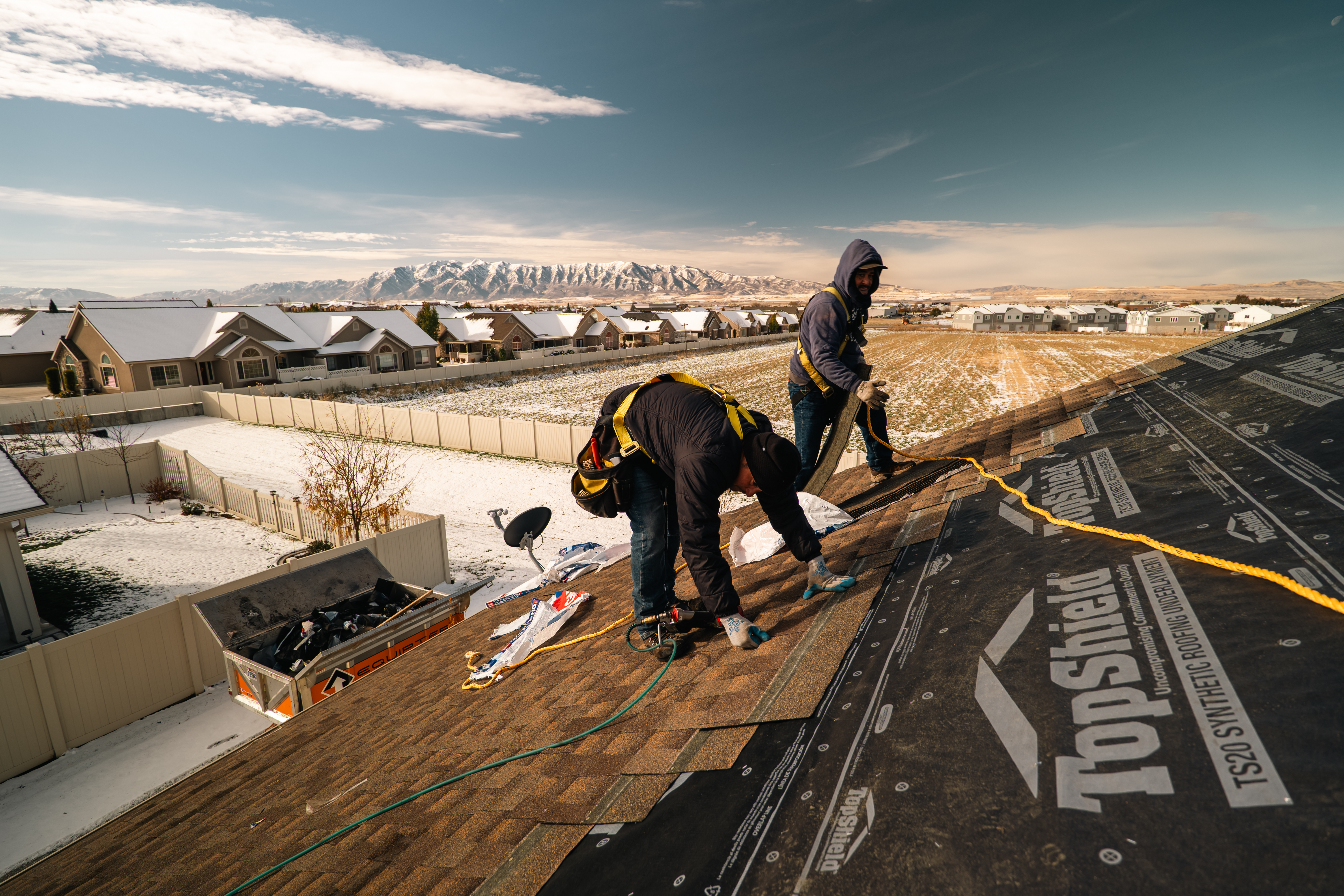
A roof is more than shingles. There are nine major components that work together to keep water, wind, and weather out of your home. Understanding what goes into a roof helps you compare estimates and spot contractors who cut corners to save money.
Every Homer roof includes all nine of these components no matter which warranty package you choose. The difference between our packages is the GAF warranty coverage, not the quality of the installation.
The 9 Components of a Complete Roof System
Roof Decking
The plywood foundation your entire roof sits on. During every replacement, we inspect every sheet. If we find rot or soft spots, we replace those sections with new plywood before anything else goes on top. This is the most important step because nothing above it matters if the deck is compromised.
Drip Edge
Metal flashing installed along every edge of your roof. It directs water away from the fascia boards and into the gutters. Without drip edge, water rolls back under the shingles and rots the wood underneath. Some contractors skip this to save money. We never do.
Synthetic Underlayment
A waterproof barrier that covers the entire roof deck. Think of it as a second skin under your shingles. If wind drives rain under a shingle, the underlayment stops it from reaching the plywood. We use GAF synthetic underlayment on every job. It outperforms old-school tar paper in every way.
Ice and Water Shield
A self-adhering membrane installed in valleys, along eaves, and around penetrations. When a nail goes through it, the membrane seals around the nail. This is critical in Utah where ice dams form along eaves in winter. Some contractors skip this to save a few hundred dollars. That shortcut causes thousands in water damage later.
Starter Shingles
A specially designed strip installed along the eaves and rakes before the main shingles go on. Starter shingles have a sealant strip that bonds to the first course of field shingles. This prevents wind from lifting the bottom edge of your roof, which is the most vulnerable area during a storm.
Field Shingles
The main shingles that cover your roof. This is what you see from the street. We install GAF Timberline HDZ on our Builder and Mid Grade packages and GAF Timberline UHDZ on our Premium package. Both use LayerLock technology that mechanically fuses overlapping layers together for superior wind resistance.
Flashing
Metal pieces installed wherever your roof meets a wall, chimney, skylight, or vent. Flashing prevents water from seeping into these intersections. We install new flashing on every replacement. Reusing old flashing is one of the most common shortcuts bad contractors take, and it is the number one source of roof leaks.
Hip and Ridge Caps
Specially cut shingles that cover the peaks and hip lines of your roof. They seal the ridge vent and give your roof a clean finished look. We use GAF Seal-A-Ridge cap shingles with Dura-Grip adhesive for a tight bond.
Ridge Ventilation
A vent system installed along the peak of your roof that lets hot air and moisture escape from your attic. Proper ventilation keeps your attic cool in summer and dry in winter. Without it, heat builds up and bakes your shingles from below, shortening their life. Moisture trapped in winter causes mold and rot.
Why this matters when comparing estimates:
When you get three estimates, do not just compare the bottom line price. Ask each contractor what is included. A $6,000 bid that skips ice and water shield, reuses old flashing, and does not replace damaged decking is not cheaper. It is a future repair bill disguised as a deal. Every Homer estimate itemizes exactly what you are getting.
Common corners contractors cut:
Skipping ice and water shield in valleys, reusing old flashing around chimneys and vents, using cheap felt paper instead of synthetic underlayment, not replacing rotted decking, skipping starter shingles, and not installing proper ridge ventilation. If your estimate does not specifically mention these items, ask why.
5. GAF Warranty Tiers: System Plus, Silver Pledge, and Golden Pledge
Your roof warranty is one of the most important parts of your investment and one of the least understood. There are two separate types of coverage: material warranties that cover manufacturing defects in the products, and workmanship warranties that cover installation errors made by the contractor.
As a GAF Master Elite contractor, Homer Roofing can offer all three levels of GAF enhanced warranties. Less than 2 percent of roofing contractors in the country hold this certification. It means GAF trusts us to install their products correctly and stands behind our work with their strongest warranty coverage.
The Three GAF Enhanced Warranty Tiers
System Plus
Our Builder Grade Package
Best for: Homeowners on a budget who want quality materials and a solid manufacturer warranty. Note: This tier does not include GAF-backed workmanship coverage. Homer Roofing stands behind our installation with our own workmanship guarantee.
Silver Pledge
Our Mid Grade Package
Best for: Most homeowners. You get GAF-backed workmanship coverage for 10 years plus the WindProven warranty with no maximum wind speed limit. This is the sweet spot of coverage and value.
Golden Pledge
Our Premium Package
Best for: Homeowners who want the maximum protection available. 25 years of GAF-backed workmanship coverage means if there is ever an installation issue, GAF pays to fix it. The UHDZ shingles are 20 percent thicker with a more dimensional look.
What Does "Workmanship Coverage" Actually Mean?
Material warranties cover defects in the shingles themselves. Workmanship coverage is different. It covers mistakes made during installation. Over 80 percent of roof leaks are caused by installation errors, not product defects. Without workmanship coverage, you are paying out of pocket to fix them.
With the Silver Pledge, GAF covers installation errors for 10 years. With the Golden Pledge, that coverage extends to 25 years. With System Plus, GAF does not cover workmanship at all. You would be relying on the contractor's own guarantee, which is only as good as the contractor's ability to stay in business.
Why this matters:
A warranty from a fly-by-night contractor is worthless if they are out of business in 3 years. GAF-backed workmanship coverage means a Fortune 500 manufacturer stands behind the installation, not just the local contractor. That is the difference between a promise and a guarantee.
What Is the WindProven Limited Wind Warranty?
The WindProven warranty covers wind damage for 15 years with no maximum wind speed limitation. Most standard shingle warranties cap wind coverage at 130mph. The WindProven warranty has no cap. To qualify, the roof must be installed with GAF shingles that have LayerLock technology plus four qualifying GAF accessories. Every Homer Mid Grade and Premium installation meets these requirements.
Ask your roofer this question:
When comparing estimates, ask each contractor exactly which GAF warranty tier they are offering and whether it includes workmanship coverage from GAF. If they cannot answer clearly, that means they are not offering GAF-backed workmanship coverage. You are relying on their word alone.
6. Pros, Cons, and Costs of Different Roofing Materials
We install four types of roofing in Utah. Each has trade-offs. Here is an honest comparison so you can decide what makes sense for your home and budget.
Asphalt Shingles (GAF Timberline HDZ / UHDZ)
✓ Pros
- ✓ Most affordable option
- ✓ Wide color selection
- ✓ Fast installation (1-2 days)
- ✓ GAF enhanced warranties available
- ✓ Proven performance in Utah climate
✗ Cons
- ✗ Shorter lifespan than metal or tile
- ✗ Can be damaged by large hail
- ✗ Requires adequate ventilation to perform well
Our take: Best for most Utah homeowners. The HDZ and UHDZ shingles with LayerLock technology are significantly better than the shingles from 10 years ago. When installed correctly with proper ventilation, they perform extremely well in our climate.
Standing Seam Metal Roofing
✓ Pros
- ✓ Longest lifespan
- ✓ Excellent snow shedding
- ✓ Fire resistant
- ✓ Energy efficient (reflects heat)
- ✓ Very low maintenance
✗ Cons
- ✗ Higher upfront cost (2-3x shingles)
- ✗ Longer installation time
- ✗ Can dent from large hail
- ✗ Expansion and contraction noise
- ✗ Fewer color options than shingles
Our take: Best for homeowners who plan to stay in their home long-term. The higher upfront cost pays for itself over time because you may never replace it again. Especially good for steep roofs where snow shedding matters.
Cedar Wood Shake
✓ Pros
- ✓ Beautiful natural appearance
- ✓ Excellent insulation properties
- ✓ Increases home value
- ✓ Classic mountain aesthetic
✗ Cons
- ✗ Requires regular maintenance (every 3-5 years)
- ✗ Fire risk without treatment
- ✗ Susceptible to moss and rot in shaded areas
- ✗ Most expensive option
- ✗ Longer installation time
Our take: Best for homeowners who want a specific aesthetic and are willing to maintain it. Popular in mountain communities. We recommend fire-treated cedar and regular maintenance programs.
Flat Roofing (TPO / Modified Bitumen)
✓ Pros
- ✓ Only option for low-slope roofs
- ✓ Good for additions and porches
- ✓ Can accommodate rooftop equipment
- ✓ Cost-effective for commercial applications
✗ Cons
- ✗ Not suitable for steep slopes
- ✗ Requires perfect drainage
- ✗ Ponding water shortens lifespan
- ✗ Limited aesthetic appeal
Our take: Best for low-slope sections, additions, porches, and commercial buildings. We use TPO for most residential flat roof applications because it handles Utah's UV exposure well.
Not sure which material is right for your home?
Schedule a free inspection and we will look at your roof, discuss your goals, and recommend the material that makes the most sense for your situation and budget. No pressure, no sales pitch.
7. What Should Be Included in a Roof Estimate?
A good roof estimate tells you exactly what you are paying for. A bad estimate is vague on purpose. Here is what to look for and what to watch out for when comparing bids.
✓ What a Professional Estimate Includes
- ✓ Exact shingle brand, product line, and color
- ✓ All roofing system components listed individually
- ✓ Specific GAF warranty tier being offered
- ✓ Decking inspection and per-sheet replacement cost
- ✓ Flashing scope (new vs reused)
- ✓ Ventilation plan
- ✓ Permit fees if applicable
- ✓ Cleanup and debris removal details
- ✓ Payment terms and schedule
- ✓ Estimated start date and duration
- ✓ Company license and insurance information
⚠ Red Flags in a Roof Estimate
- ⚠ Lump sum price with no line items
- ⚠ No specific shingle brand or product named
- ⚠ "Lifetime warranty" with no tier specified
- ⚠ No mention of decking inspection or repair pricing
- ⚠ No mention of ice and water shield or underlayment
- ⚠ Verbal quote with no written contract
- ⚠ Pressure to sign today or lose a discount
- ⚠ Requires full payment upfront
- ⚠ No company license number listed
- ⚠ No proof of insurance offered
What a Homer Roofing estimate looks like:
Every Homer estimate is a detailed written document that itemizes every component, names the exact GAF products being used, specifies the warranty tier, includes our per-sheet decking replacement price, and lays out payment terms clearly. We want you to compare our estimate side by side with others. That is how we win work.
8. When We Will Tell You NOT to Replace Your Roof
Not every roof problem requires a full replacement. We turn down replacement jobs regularly when a repair is the right answer. Here is how we decide, and how you can think about it too.
Repair Is Usually the Right Call When:
- ✓ Damage is isolated to one area (a few missing shingles, one leak)
- ✓ Your roof is less than 15 years old and otherwise in good shape
- ✓ Storm damage is limited to a section, not the whole roof
- ✓ The repair cost is less than 30% of a full replacement
- ✓ Your roof has years of useful life remaining
Replacement Makes More Sense When:
- ✗ Your roof is 20+ years old with widespread wear
- ✗ Multiple areas are leaking or showing damage
- ✗ Shingles are curling, cracking, or losing granules across the roof
- ✗ You have had multiple repairs in recent years
- ✗ The repair cost approaches 50% or more of a replacement
- ✗ Your decking has widespread rot or soft spots
Our promise on this:
If your roof can be repaired, we will tell you. We would rather do a $500 repair and earn your trust than sell you a $10,000 roof you do not need. When the time comes for a replacement, you will call us because we were honest with you the first time.
9. Do You Have to Be Home for Your Roof Replacement?
No. You do not have to be home during the roof replacement. Most of our customers go to work and come home to a new roof. Our crew works entirely from the exterior of your home. We do not need access to the inside.
That said, here is what to expect and how to prepare.
Before Install Day
- ✓ Move vehicles out of the driveway and away from the house
- ✓ Take down any fragile items from walls inside (vibration from tear-off can shake things loose)
- ✓ Move patio furniture, grills, and potted plants away from the house perimeter
- ✓ Let your neighbors know there will be noise and activity for 1-2 days
- ✓ Make sure our crew has clear access to the driveway for material delivery and dumpster placement
- ✓ If you have pets, keep them inside or arrange for them to be elsewhere during the work
During the Work
It will be loud. Tear-off is the noisiest part and usually takes the morning. You can stay inside if you want, but expect significant noise and vibration. Our crew takes breaks but generally works straight through to finish as quickly as possible.
Communication during install:
Your project coordinator will text you updates throughout the day. If we find anything unexpected during tear-off (like rotted decking), we call you immediately before doing any additional work. You will know what is happening even if you are not home.
10. How Long Does it Take to Replace a Roof?
Most residential shingle roofs take one to two days. A straightforward single-story home with a simple roofline can be done in one day. Larger or more complex roofs with multiple dormers, valleys, skylights, and steep pitches may take two days.
Metal roofs take longer because of the precision involved in cutting and fastening panels. Expect three to five days for most metal roof installations.
What Affects Timeline
11. What Does the Roof Replacement Process Look Like?
Here is exactly what happens from the moment our crew arrives to the final cleanup. No surprises.
Material Delivery
Roofing materials delivered to your property the day before or morning of installation.
Setup & Protection
Tarps laid around the house, ladders positioned, dumpster placed.
Tear Off
Old shingles, underlayment, and damaged materials removed down to the decking.
Inspect Decking
Every board inspected. Rotted or damaged sections replaced.
Install Underlayment
Ice and water shield in valleys, synthetic underlayment over entire roof.
Install Shingles
Starter shingles, then field shingles installed from bottom up.
Flash Penetrations
Proper flashing installed around chimneys, vents, walls, and skylights.
Install Ventilation
Ridge vents installed for proper attic airflow.
Cleanup & Inspection
Magnetic sweeper run, debris removed, final inspection completed.
12. Does Your New Roof Need Maintenance?
Asphalt shingle roofs are low maintenance but not zero maintenance. A few simple habits will help your new roof last its full expected life.
Annual Visual Inspection
Look at your roof from the ground once a year. Check for missing, curling, or damaged shingles. Look at flashing around chimneys and vents. If anything looks off, call for a professional inspection.
Keep Gutters Clean
Clogged gutters cause water to back up under your shingles. Clean them twice a year, especially after fall leaves drop. This is the single most important maintenance task.
Trim Overhanging Branches
Branches that touch your roof scratch the surface coating off shingles and drop debris that retains moisture. Keep branches trimmed back at least 3 feet from the roof surface.
Watch for Moss and Algae
Shaded areas can develop moss or algae growth over time. GAF shingles with StainGuard Plus resist algae, but heavy shade in north-facing areas can still be a problem. Address it early before it causes damage.
Never do this to your roof:
Never pressure wash asphalt shingles. The high-pressure water strips the granule coating off the surface, which is what protects the shingle from UV damage. One pressure washing session can take years off your roof's life. If you need cleaning, use a low-pressure chemical treatment recommended by GAF.
13. How Do You Hire a Reliable Roofer?
We wrote this section knowing that some of you reading this guide will not hire us. That is fine. We would rather help you make a good decision than pressure you into a bad one. If you are comparing roofing contractors in Utah, here are the ten questions you should ask every single one of them, including us.
10 Questions to Ask Any Roofer Before You Hire Them
1 How long have you been in business in Utah? +
Look for at least 5 years of continuous operation in the state. Storm chasers set up temporary LLCs, work for one season, and dissolve the company. A contractor with deep roots in the community has a reputation to protect and a physical address you can visit. Homer Roofing has operated in Northern Utah since 2003.
2 Are you licensed and insured? Can I see proof? +
Utah requires a general contractor license for roofing work. Ask to see it. Then ask for a certificate of insurance showing both general liability and workers compensation coverage. Call the insurance company directly to confirm it is active. If a worker gets injured on your property and the contractor does not have workers comp, you could be liable.
3 Do you use your own crews or subcontract the work? +
Subcontracted crews have no direct relationship with the company that sold you the roof. If something goes wrong, you are caught between two businesses. Companies that use their own trained crews have more control over quality and accountability. Ask this question directly and watch the reaction.
4 What manufacturer certifications do you hold? +
Certifications like GAF Master Elite are not participation trophies. GAF audits their certified contractors on installation quality, customer satisfaction, and business practices. Less than 2 percent of roofing contractors in the country earn Master Elite status. If a roofer claims a certification, verify it on the manufacturer's website.
5 Which specific GAF warranty tier are you offering me? +
If they say 'lifetime warranty' and cannot name the specific tier (System Plus, Silver Pledge, or Golden Pledge), they either do not understand the warranty system or they are not certified to offer the enhanced tiers. This one question separates knowledgeable contractors from the rest.
6 Will you provide a detailed written estimate before I commit? +
You should never sign a contract based on a verbal quote. A professional estimate itemizes every material, every component, the warranty tier, decking repair pricing, permit fees, and payment terms. If the estimate is vague, the work will be too.
7 Can I see photos of recent jobs in my area? +
Any established roofer should have a portfolio of completed work. Ask for addresses of recent jobs so you can drive by and see the quality for yourself. Better yet, ask if you can talk to those homeowners. A company with happy customers will have no problem connecting you.
8 Do you pull permits when required? +
Not every Utah municipality requires a roofing permit, but many do. A contractor who skips permits to save time is cutting corners. When you sell your home, unpermitted work can become your problem during the inspection.
9 What happens if you find damage under the old shingles? +
This is where bad contractors surprise you with charges. A professional contractor tells you upfront what their per-sheet decking replacement cost is. They call you before doing any additional work. They explain the damage and give you the option before adding anything to the bill.
10 What does your cleanup process look like? +
It sounds minor but cleanup tells you a lot about a contractor. Ask if they use magnetic nail sweepers. Ask if they blow off hard surfaces. Ask if they tarp landscaping. A company that takes shortcuts on cleanup takes shortcuts on the roof.
Ready for Your Worry-Free Roof?
Schedule your free roof inspection. We will assess your roof honestly, explain your options clearly, and give you a detailed written estimate with no pressure and no obligation.
Or call us directly: (435) 787-0910